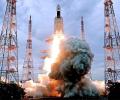
ISRO is developing a third launch pad at Shriharikota to accommodate heavier satellites and next-generation launch vehicles. The new facility will support both crewed and uncrewed missions.
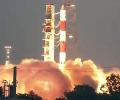
ISRO chairman announces plans for nine major launches by the end of the fiscal year, including the Blue Bird Block2 communication satellite for the US in collaboration with NASA.

Weighing 6,100 kg, the communication satellite would be the heaviest payload to be placed into the Low Earth Orbit (LEO) in LVM3 launch history from Indian soil.

Thursday's launch is the last one of 2020 for ISRO.
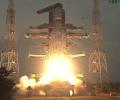
The heaviest communication satellite to be launched from the Indian soil onboard a new generation, homegrown 'Bahubali' rocket was successfully placed into the intended orbit on Sunday, the Indian Space Research Organisation said.

These upcoming launches carry added significance in light of setbacks suffered in recent years.
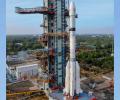
At 6.23 am on 29.1.2025, the 50.9 metre tall and weighing 420.7 ton Geosynchronous Satellite Launch Vehicle-F15 (GSLV-F15) is slated to blast off from the second launch pad carrying the 2,250 kg NVS-02 navigation satellite.

The GSAT-31 is a 'high power' communication satellite going to serve and replace some of the satellites that are going to expire soon.

The Indian space agency has already begun work on the third generation of the earth observation satellite -- the first of which will be ready by 2018 and boost the capability to generate digital maps.
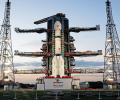
The imaging technology in Nisar can provide very high-resolution data on changes as small as one centimetre in size on the earth's surface.
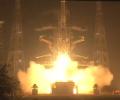
The Indian Space Research Organisation successfully launched its 100th mission on Wednesday, with a GSLV rocket carrying navigation satellite NVS-02.
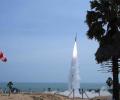
The fuel cost will come down if rockets are launched from Kulasekarapattinam as they will have a straight trajectory and need not have to avoid Sri Lanka, which is being done by rockets flown from Sriharikota.

The Department of Space (DoS) plans to realise entirely-built rockets -- GSLV-Mk III and SSLV -- from Indian industry partners, in addition to PSLV, according to a top official of its commercial arm NSIL.

On Sunday morning, in its mission to place an earth observation satellite and students satellite into the low earth orbit, the SSLV-D1/EOS-02 blasted off precisely at 9.18 am amid cloudy skies from the first launch pad at Satish Dhawan Space Centre in this spaceport.
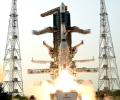
Over 32 missions -- satellites and rockets -- have been planned for the year.

The ISRO had earlier said Chandrayaan-2 will be launched in a window from January-February 16, 2019.Sources said it is expected by the middle of next month but no date has been finalised.
If successful, this would increase capacity to hurl small satellites into space, meeting both local demand and serving global customers.

The heaviest rocket of the Indian Space Research Organisation -- LVM3-M2/OneWeb India-1 -- blasted off from the Sriharikota spaceport on Sunday to place 36 broadband communication satellites into the Low Earth Orbit (LEO) for a UK-based customer.

'We are looking at a joint venture between ISRO and a few companies to assemble the PSLV and launch it from Sriharikota.' 'In a month or two, the vehicle assembly building will be ready.' 'After that, we could see 13, 14 launches a year.'

Skyroot Aerospace has become the first private company in India to give wings to the Indian space programme, after the sector was opened to private players by the Centre in 2020.
ISRO's vendor policy and quality control processes are under scanner.

K Sivan has to hasten the effort to bring in private players into satellite and rocket building and replicate India's software success in aerospace.

'When a Project Director is appointed, the whole organization -- including the Chairman ISRO -- works for his success. It is a lesson that has been of abiding value all through the other projects I have worked on,' recalls the late President, one of the earliest pioneers at ISRO.

Global analysts say a successful launch of operational GSLV MkII rocket will reduce dependency for ISRO on foreign launchers.

Pride is all ours and of those who made a beeline to Halls 3 and 5 that showcased indigenous defence technologies at the Make In India Week.

With the launch of GSLV-MK III, slated for April, it will be able to cater to bigger satellites as well.

'With India's growing capabilities in the space sector, this creates promising opportunities for enhanced collaboration and market access.'

The success of the PSLV-C34 mission is a result of ISRO's professionalism and the hard work put in by their scientists over the last many decades., says Ajay Lele.
Godrej and some other firms are frustrated at what they say is the slow execution of projects and lack of government support, which are hampering India's efforts to compete with China and Russia as a cheaper option for launching satellites.

'India has got a unique opportunity to get more and more business from outside as India is cost-effective and reliable.'

The 6-metre tall launch vehicle Vikram-S is named after Vikram Sarabhai, the father of the country's space programme and lifted off at 11.30 am.

'What we are trying for is to make space travel easier like air travel.' 'We have already established ourselves... the fact that other countries are coming to seek our help shows our technology is mature.'

Dr Bhabha and Dr Sarabhai didn't feel guilty for their ambitions; it was for those 'mad scientists' that India is a powerhouse -- both at the atomic level and in the vastness of space, observes Kumar Abishek.

NASA said it is looking forward to explore the solar system with its Indian counterpart.

It has already tasted success with the moon mission and Mangalyaan. Is man in space the next frontier for ISRO?

The Mars mission is overwhelmingly irrelevant to space science and won't advance the frontiers of knowledge. It will divert attention from the real technological challenges facing the Indian space programme, and will further distort our science and technology priorities, says Praful Bidwai.

'India must close the missile technology gap with both China and Pakistan as early as possible, or else the credibility of India's nuclear deterrence will remain suspect,' says Brigadier Gurmeet Kanwal (retd).
 © 2026 Rediff.com - Advertise with us - Disclaimer - Privacy Policy - Sitemap - Feedback - About us - Terms of use - Grievances